Exhibition at Sunderland Museum Reopens the Stories of County Durham’s Mining Past
Written by Sophie Airson on 5th December 2025
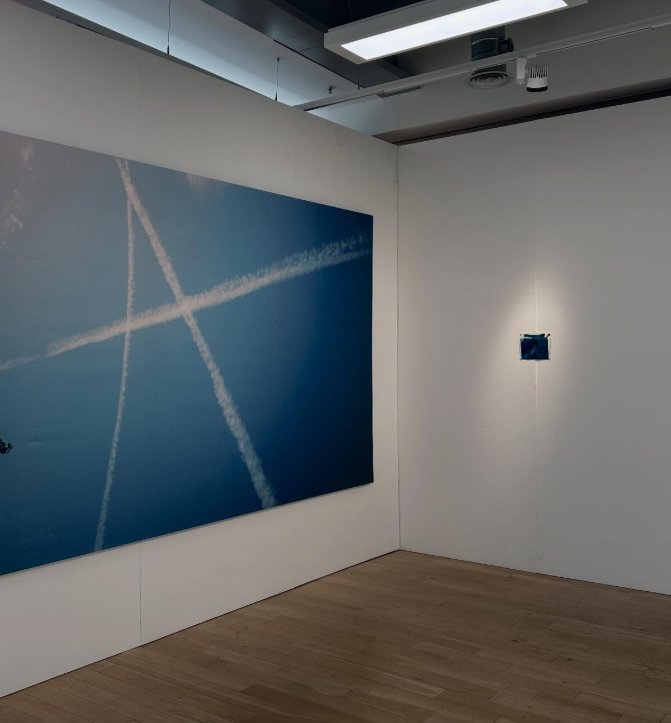
Going Back Brockens is an exhibition, currently displayed at Sunderland Museum and Winter Gardens, that revisits colliery sites, 40 years after the Miner’s Strike.
Why is it important that these stories are told years after they happened?
Narbi Price, the artist of the paintings within the exhibit, said: “We gain a richer understanding of what’s come before, what is happening now – looking at a painting facilitates and enables this in a unique way.”
Price created 40 new painting of former colliery locations all over County Durham as they are today. Many of those sites have been redeveloped for various new uses. For example, the area that was once Houghton Colliery has been transformed into a retail park, but without forgetting what once was; paintings and statues honouring those who worked there remain.
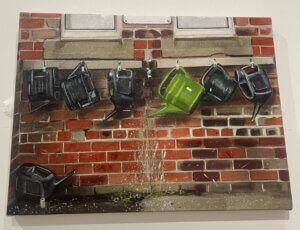
Artist: Narbi Price. Photo Credit: Sophie Airson
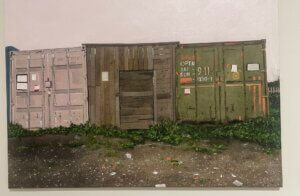
Artist: Narbi Price. Photo Credit: Sophie Airson
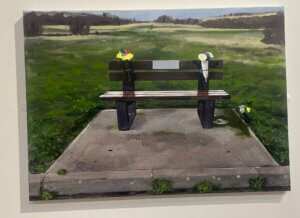
Artist: Narbi Price. Photo Credit: Sophie Airson
Alan Mardghum, a spokesperson on behalf of Durham Miners Association, said: “I think it’s important to remember that our mining past for a number of reasons. When we remember our past, it allows us to reflect on lessons learned and allows us to create a better future.
“It is also vitally important that the younger generation are made aware of the contributions made by miners in the economic development of the United Kingdom.”
Accompanying the painting is an immersive sound installation by Mark Hudson of interviews of the voices people who lived through the strike, from Hudson book Coming Back Brockens (1994), as well as a series of short films by Carl Joyce, called ‘Where we belong’, inspired by Hudson’s book.
Each of the six films were from different people’s perspectives and their relationship with County Durham.
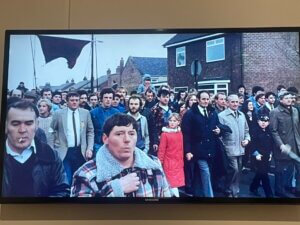
Photo taken of one of the six short film playing on a screen. Photo Credit: Sophie Airson
There appears to be a love-hate relationship with the county, with many struggling to feel proud of where they come from. Much of the younger generation know little about the past; all they see is what has been left behind — neglected towns and uncertainty about their futures.
Those who have learned to be proud of their accents, homes and history are working to help younger generations feel the same. The Durham Miners Association is determined to make sure credit is finally given to the unrecognised contributions made by miners.