The unsung heroes of non-League football: Inside a physio’s life far below the Premier League
Written by Harry Johnson-Clark on 24th March 2026
On a muddy pitch in front of a few thousand fans, there isn’t a team of specialists waiting when a player goes down, just one physio and their kit bag.
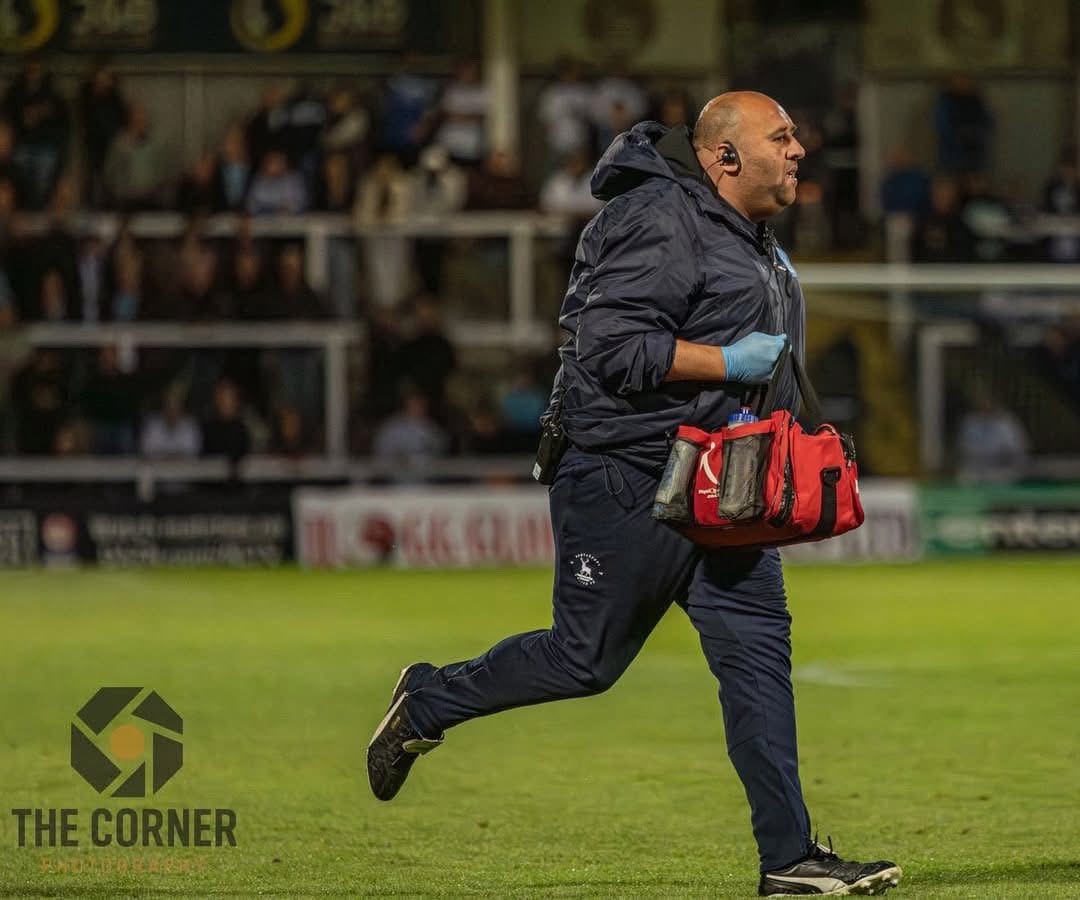
Hartlepool head physio, Danny O’Connor, rushes onto the pitch to treat a player. Credit: Adam Cook, The Corner Photography.
While Premier League clubs manage around 50 injuries a season with entire medical departments, the real strain of English football is felt further down the pyramid, where physiotherapists work relentlessly with limited resources to keep their players on the pitch.
Anyone who’s been to a non-League football match in England knows the intensity and physicality that comes with it every fixture, and this only elevates the risk of injury.
For Danny O’Connor, this scene isn’t unusual, it’s the day-to-day job. As head physio at Hartlepool United – where the squad depth and medical team are limited – his job is as vital as anyone on the pitch.
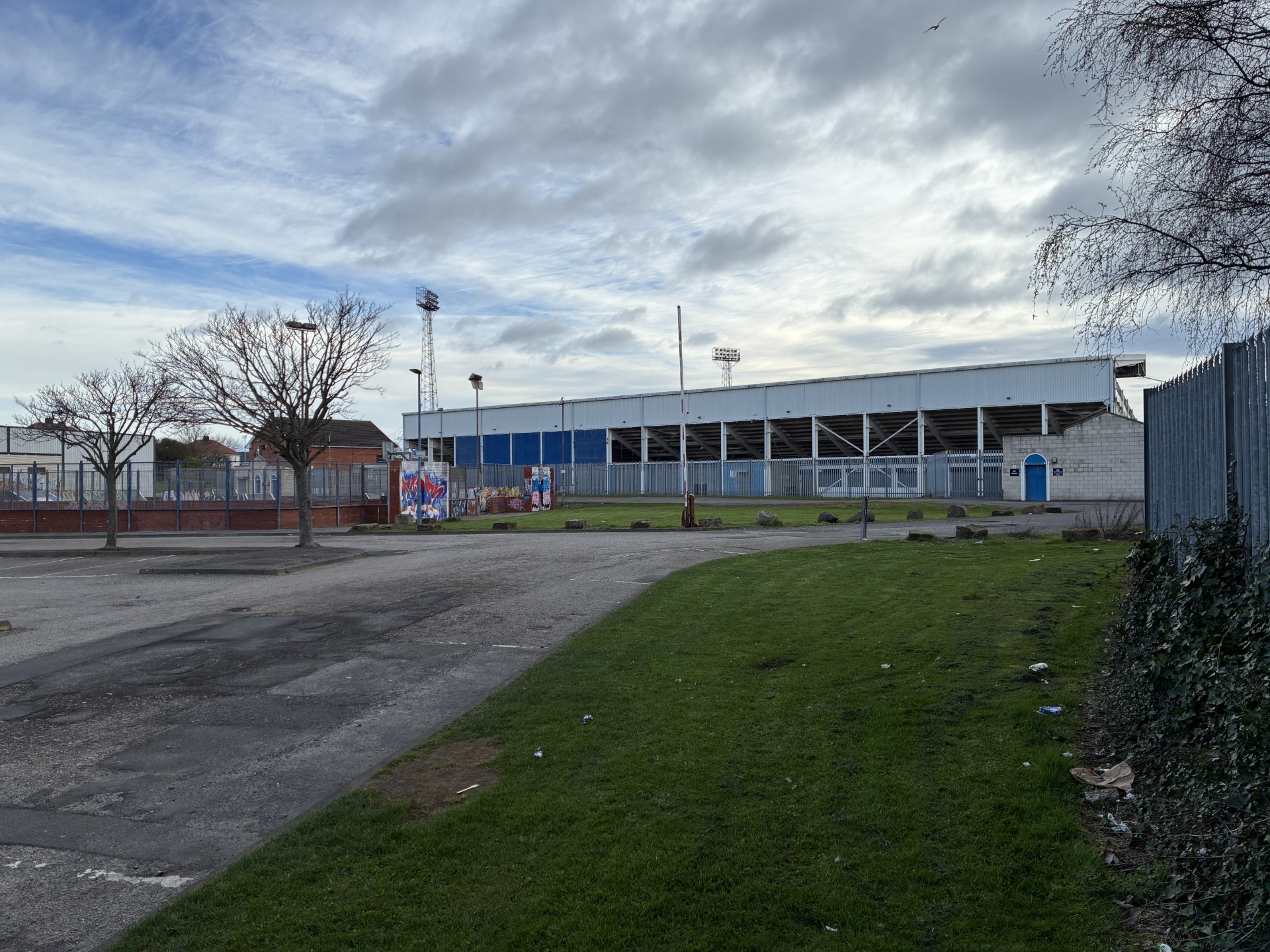
Outside of The Prestige Group Stadium, home of Hartlepool United. Credit: Harry Johnson-Clark
“We’re not a Premier League club, I think they have a physio dedicated to every three players, it’s just not feasible at our level,” says O’Connor when speaking about his role at Hartlepool.
“I always worry when I’ve got an empty treatment board, I have a board in my treatment room at the training ground, I always worry when it’s empty because that means there’s loads of people that can get injured. It’s just management really; you’ve just got to manage your time, manage players, things like that.
“I think there was one three years ago, I had a full starting XI, 4-3-3 in positions, goalkeeper, right back, it was a decent team to be honest, but it’s just the nature of the role really.”
Danny has been at Hartlepool for over two and a half years now, and before Pools he worked at Darlington and Swim England; he has also owned his personal clinic for almost five years.
Despite the workload, he speaks highly of his role at Hartlepool, and he says he prefers physiotherapy at this level to working in the top divisions.
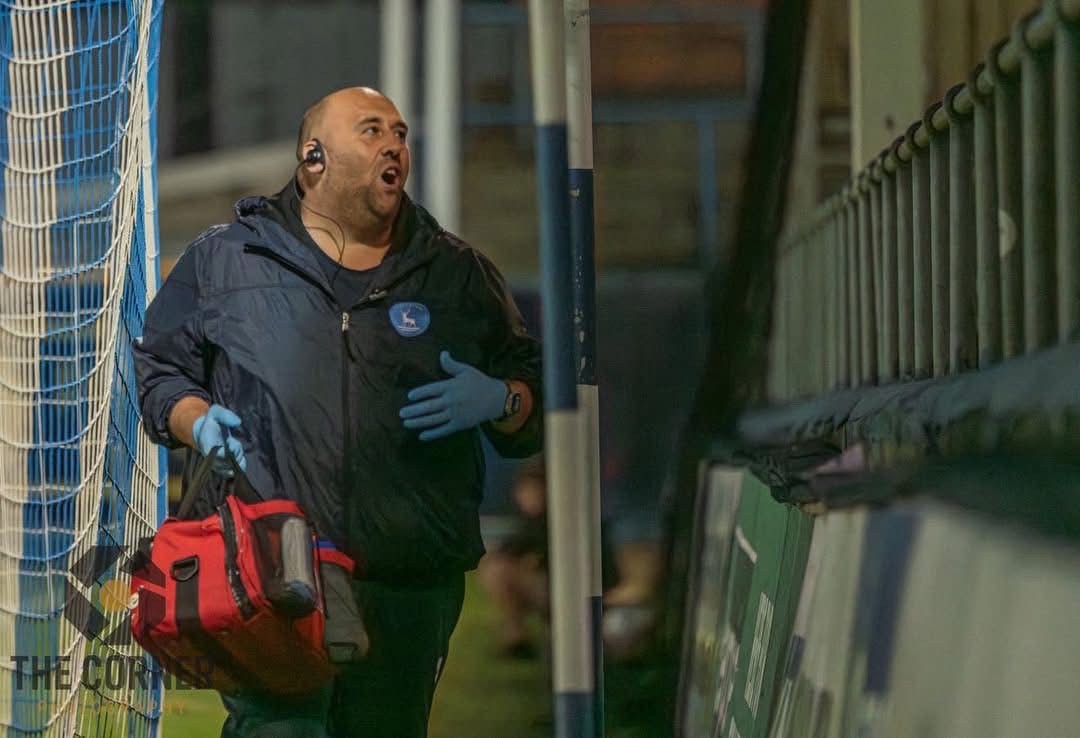
Danny O’Connor laughing with the away fans. Credit: Adam Cook, The Corner Photography.
“It’s a bit different at the Premier League level, but it kind of puts me off that role there, because a lot of it is doctor led.
“I’ve got friends at top-flight clubs that will tear their hair out because they don’t get on well with the senior doctor or who’s in charge.
“The good thing about Hartlepool is it’s kind of my role, it’s on me, touch wood if I don’t make a mistake, but if you do make a mistake, you can kind of own it and rectify it yourself.”
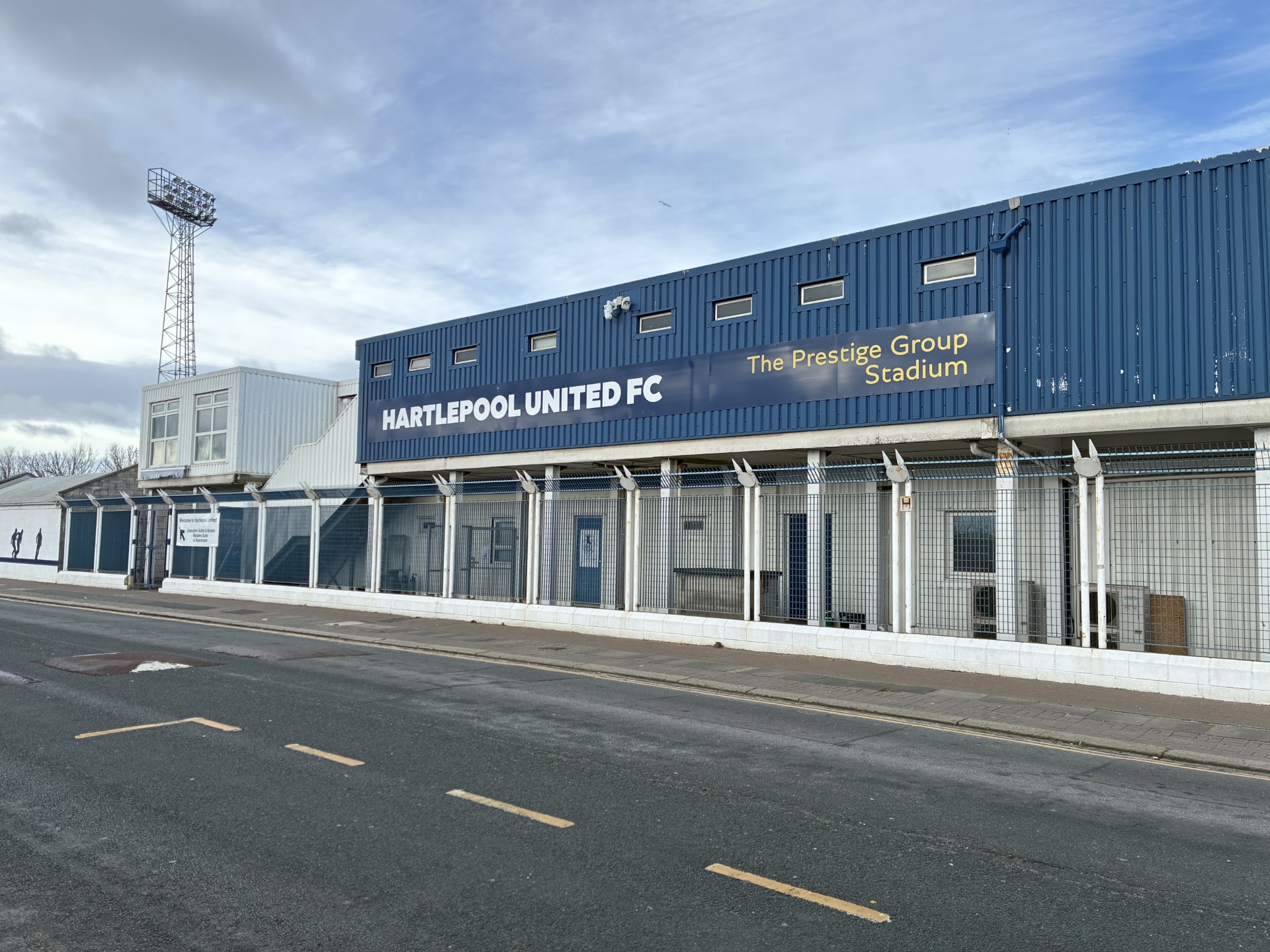
A quiet morning outside of the Prestige Group Stadium. Credit: Harry Johnson-Clark
On top of all things, the mental side of being a physio will always be a challenge to anyone in the role, particularly at this level of football.
“Especially at our level, these aren’t Premier League players where if they’re injured, they’re set for life, this is their work, and this is their money, and their family, and everything, and no-one sees that.” says Danny.
“It’s devastating that no one sees that side. I always kind of go mad when people say about players, all they do is kick a ball, and you have no idea the risks that the lad’s taking.”
Unlike in the Premier League, a serious injury at this level could have irreversible consequences on a player’s career, and the pressure for the physio that comes with this is obviously hard to work with.
“It’s not even so much the injury, it’s the aftermath of it all, you know, like, those are the darkest times.”
Another man who knows the intense workload of being a physiotherapist is Josh Scott, a Physiotherapist, football coach, and current player for Stockton Town.
He opened his own clinic about 6 months ago, and says it’s been a “good but stressful experience.”
“Coming from a sport background and being around a physio every day I seen what they had to go through seeing different patients with different problems.
“I’d say what I overlooked a little bit was the hard part of telling that they had to manage what they did if they had an injury and making sure they put in the effort which was needed to get them back to full fitness.”
Owning his own clinic too, O’Connor must find a perfect balance between his commitments to his full-time role at Hartlepool and working at his own place.
“Obviously football’s got to come first, that’s my full-time job, so time-wise it kills us here, there’s a couple of times in my clinic where, I don’t know, I’ve had a full diary booked on a Tuesday night and we’ve drew in the FA Cup and we’re going down to London on it, so I can’t work in there, but the football’s got to come first,” he added.
In a game obsessed with the glamour at the top, it’s easy to forget the huge amount of grit and hard work that goes into the non-League level.
At clubs like Hartlepool, a whole season can be determined by the work and resilience of those like Danny O’Connor, whose work behind the scenes stitch together the lower leagues.