Sunderland is a Music City: How music has given a platform to a generation of young musicians
Written by Erin Jardine on 24th March 2026
Music City launched the campaigns like the Year of Music to highlight young musicians. With Music City’s strategies to amplify and progress their careers, Erin reports on the local talents that are being lifted out of deprivation and into stardom.
Unless you were deep in the Sunderland music scene, no one could have expected the emergence of somewhere like Sunderland as a Music City. You possibly wouldn’t have expected it to lead to BBC Radio 1’s Big Weekend being hosted here either. However, Sunderland is rife with talent, and now, there is the opportunity to broadcast it.
Sunderland joined the Music Cities network on 21st June 2025, and as it stands, it is only the second city in the UK to hold the prestigious title. It joined the likes of Manchester, Sydney, Berlin and Brussels. Developed with the aim to increase music education, use music to help social progress, nurture mental health and better the lives of Sunderland residents, Music City is designed to amplify the emerging talent of Sunderland.
Music City has partnered with a vast range of local artists and publications, such as Gan On, Sunderland’s very own resident music magazine. Jenny Dean, a radio presenter and ‘local scene hero’, founded and edits Gan On. Due to this, she’s seen a lot of local talent come through in recent years and has experienced and witnessed the impact of the Music City schemes firsthand.
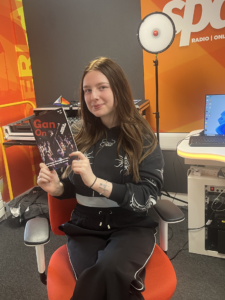
Jenny Dean Credit: Erin Jardine
“I feel like it’s made people realise, more than anything, that they can have those opportunities. Before the Year of Music in Music City, obviously, yes, there were loads of musicians, and there were loads of live music going on. But I feel like a lot of people didn’t realise just how many opportunities, or just how much, were out there that they could also be doing. So, I think it’s really helpful to bring attention to it.”
The Year of Music was an initiative that launched Music City in Sunderland, and it is running from June 2025 to June 2026. With exactly 365 days of music, jam-packed with festivals, gigs and workshops, it aims to create a partnership with musical education providers and specialists, such as The Bunker, to support music programmes and community organisations.

Credit: Erin Jardine
As well as running Gan On, Jenny is an indie-rock singer-songwriter by trade and has an ever-growing discography, consisting of five singles and one EP-length album. Detailing the gruelling process of songwriting and recording, she praises Music City for its promotion and support.
“You’ve got to do a lot of graft yourself. You want to be successful, but it can be really discouraging because it’s like you feel you’re doing so much work to get your music heard when really you want to just be doing the music.
“For me, being a musician, I’ve got to write the songs. I’ve got to go into the studio, and we’ve got to record them. I don’t mix or master them, but, like, we’ve got to do the mixing, the master, and then you’ve got to come up with a cover art, you’ve got to do a release plan, you’ve got to market it at least six weeks in advance. But for me personally, I prefer making the music over promoting the music.
“I think Music City as a collective has been good with coming up with events and stuff. When the Mercury Prize came last year, Music City jumped on the event at Pop Recs to give Pat (Patrick Gosling), Ruby Kelly and The Last Time the chance to perform as part of the Mercury Fringe. I think it’s been really good for Sunderland knowing those things are about. There could obviously be more, but it’s about working up to that. They are coming, but it’s definitely that Sunderland is a Music City.”
Sunderland is ranked ninth in terms of the highest proportions of income deprivation on Gov.uk, with less than 1% of neighbourhoods in England being more deprived than most of those in Sunderland. With a reported £161.4m shortfall in music education reported in 2025 and claims that children from poorer backgrounds are less likely to access subjects like music and arts, the importance of Music City grows. In an industry that brought in £8b to the UK economy in 2025, a record number, music education is more important than ever.
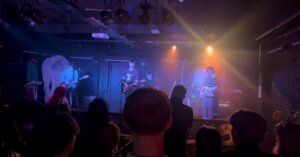
Wool Credit: Erin Jardine
Grassroots venues like The Bunker, supported by Music City, provide safe spaces for music education for young people. Harry McCourt, the bassist of Spacecadetbloom, didn’t study music at A-level or at university, but instead accesses music spaces through The Bunker, Music City and through friends at Northern Academy of Education (NAME) courses.
“I think places like The Bunker and YMP, the Young Musicians’ Project, allow for outside of school opportunities to delve more into music and strengthen your talent and just make those opportunities for you. As well as the Music City project just coming about, I think that will provide way more opportunities for young people to get into their music, despite everything.”
The focus on music in Sunderland has led to new opportunities for the city. In January, it was announced that BBC Radio 1’s Big Weekend would be hosted in Sunderland on 22nd-24th May. Whilst big names like Olivia Dean, Zara Larsson and Niall Horan are taking the stage, it gives an opportunity for many local artists to be showcased as well. Swindled, a five-piece alternative/pop band, are playing the BBC Introducing stage, as well as Tom A. Smith, who released a track called Music City to celebrate the city’s new status.
Dare to say it, Sunderland IS a Music City.