More than a game: Mental health in Sunday league football
Written by George Puckey on 24th March 2026
Two players in every starting 11 are currently fighting with there own mental health problem now. This is a story about a muddy pitch 2 teams battling it out can be improving it one step at a time.
Across the country thousands upon thousands of men tie up their boots put their kits on and trudge out onto hundreds of mud-soaked pitches for 90 minutes of Sunday league football. For many of these men woman and children it can be seen as a beam of light at the end of a mundane week. More than any of the players realise it could be the very thing holding their mental health together.

Screenshot
For any given week 1/5 peoplearound the UK have reported to experience any range of mental health issues such as anxiety and depression. Think in your team of 11 players on average 2 of them are suffering from something much worse than a missed penalty kick. This is just of the 11 starters not factoring in the coaches substitutes groundsmen across every team in the UK and the numbers start to become something that can be hard to ignore.
Mental health especially in men around the UK has long been silenced for many generations leading to men finding it hard to talk about their own struggles. In the dressing room for many amateur football clubs that can feel almost silent, where banter around the dressing room seems to be the only form of communication and toughness seems the only way. To admit your struggling feels as daunting as the stick, you’d receive from missing an open goal.
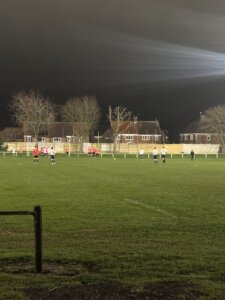
And yet Sunday league football can also bethe place where the silence canfeel less overwhelming, the sense of community, the post-match pint, thesense of accomplishment as a team after coming back from 3 goals down to scrape a draw. These are all the informal ways in which many mental health professionals and football teams have already

A team who has already taken meaningful action towards supporting men’s mental health further is Minds United. Founded 7 years ago by Tarik Kaidi a man who himself has struggled with his mental health has completed a full 360 and now partners with many hospitals getting direct referals for men who are struggling to escape their own struggles to come down for a couple hours of training. The club is living proof that other teams around the country could support their players mental health more.
The accolades for this dedication have followed being 1 of only 4 clubs to partner with Under Armours ‘Protect this house campaign’ with connections to working with the England set up. For a club built from scratch with no blueprint or silver spoon the growth is inspiring and proves that many clubs can tailor more towards mental health with a lot of effort.
When asking Tariq what keeps him going, he stated “the main thing is the difference it makes in people’s life’s”. Minds United FC offers something that goes beyond the full-time whistle. For people who arrive at the club without much family or community and maybe lacking a bit of hope, the club becomes their family. “Some people haven’t got family around them” In the football landscape that raise awareness Minds United actually does something about it.
The physical benefits of playing football are well known and feed directly into mental health. Being active can reduce your risk of depression by up to 30%. It can also reduce anxiety and battles with low self-esteems. For a Sunday League player who may be stuck in an office or on a building site all week, those 90 minutes of running, shooting and shouting at your left winger to pass the ball are all things that can provide an escape from there day to day. When being physically active your brain realises endorphins and serotonin which improve your mood and can help to remove tension.
Christian Ijegbi a Sunday league football player knows this feeling well a player who knows how doors can shut in the game off football but also how it opens many other. He speaks about what the game gives you beyond 90 minutes ‘you surround yourself with people who love the game like you do’. Describing a sense that goes far past the full 90 feeling “part of the community”, conversations flow where they don’t elsewhere. He states that you do have to be careful if you were safe to speak about your mental health. “If you speak about you speak about your mental health, make sure everyone understand what you are going through “it’s a quiet but also very important point that openness requires people to be prepared to listen and understand.
Of course, not every dressing rooms are safe, millions of lives are at fearful to shut down and continue there shame and silence. The lad culture of a football dressing room can be at times a very toxic place reinforcing the exact kind of toxic masculinity that keep men away from asking for help. Jokes that dig a bit to far deep, mockery that is claimed to be ‘banter’ mental health stigma is still a problem and interventions are still needed
But the tide is slowly changing, slowly. More Sunday league clubs are signing up to mental health programmes more players are talking. 50,000 people have accessed minds mental health for sport e learning course. Many of whom play or work with grassroots football teams, learning how to spot mental illness and how to start a difficult conversation with those they see struggling.
The beautiful game has never just been about football. You are showing up, taking part in your team. And sometimes just getting out and doing it is winning your own personal battle.
Word count 964
This piece could be aimed at four four two magazines