
Holi: how the Hindu festival brings Sunderland’s community together
Written by Arjun Askoolam on 24th March 2026
Join Arjun Mistry in exploring how the Hindu festival of Holi has shifted from being deeply rooted in religion to an inclusive, unifying celebration of love.
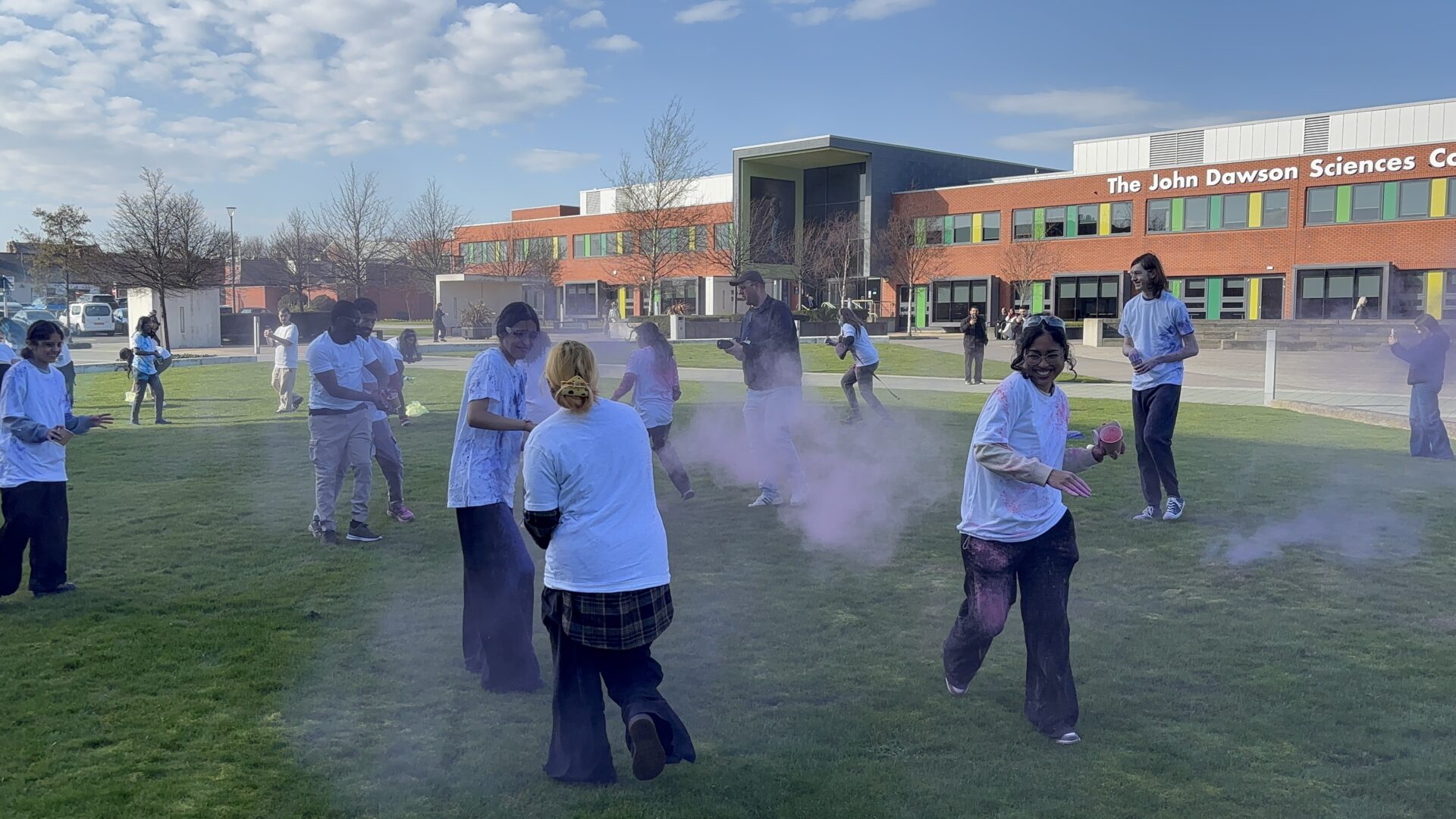
There are explosions of vibrant colours amongst the crowd, frenzies of pink, blue and purple hues shooting across the scene. The sun’s radiant rays stretch across the vast field soaked in a plethora of tints and shades with a slight breeze in the air. Music can be heard blasting from the speakers as students dance in the midst of blazing, rainbow-like colours.
Holi, the festival of colours, spring and love isn’t just simply about religious tales and scripture, it is also about rallying people together regardless of anyone’s background. The University of Sunderland hosts an annual Holi event.
Students can attend to find themselves lost in a storm of colourful powders. Holi isn’t just for religion, it’s for the people. University student and attendee, Dhanish Doshi, says: “I didn’t know they were doing Holi in Sunderland and when I came here, it was so nice.” Students engage in a playful game of colour throwing using a vibrant, fragrant powder called ‘holi gulal’.
In recent years Holi has become increasingly popular across the western world, especially in the UK and USA. For example, the Leeds Holi Festival initially saw an attendance of 230 people but had increased to over 27,000 attendees by 2023. This raises the question: why is Holi so popular?
Traditionally, Holi serves as the festival of colours. It signifies the good over evil, the arrival of spring and the end of winter. Pandit Bal Krishan Gautam, a priest at Hindu Temple Newcastle, explains: “There is a story about Lord Prahlad and they wrote about Vishnu Supreme, so it is also about remembering them as well.”
The day is also associated with the divine love of Radha and Krishna. While rooted in religious traditions, the festival has expanded to a global, joyous occasion that acts as a catalyst for unity and fun, new beginnings. An anonymous attendee says: “I celebrated my first holi during the event UoS held recently, previously before attending, I didn’t really know much about it as I myself am not Hindu.”
At events like these, it is undeniable that happiness is in the air. Holi is not only a religious festival, but is also a chance for people to come together in the name of love under a unified community. The attendee continues to say: “This event was definitely more than just an excuse to throw colourful powder at each other, it’s a message from the university that all are welcome and everyone has the right to feel included and heard.””
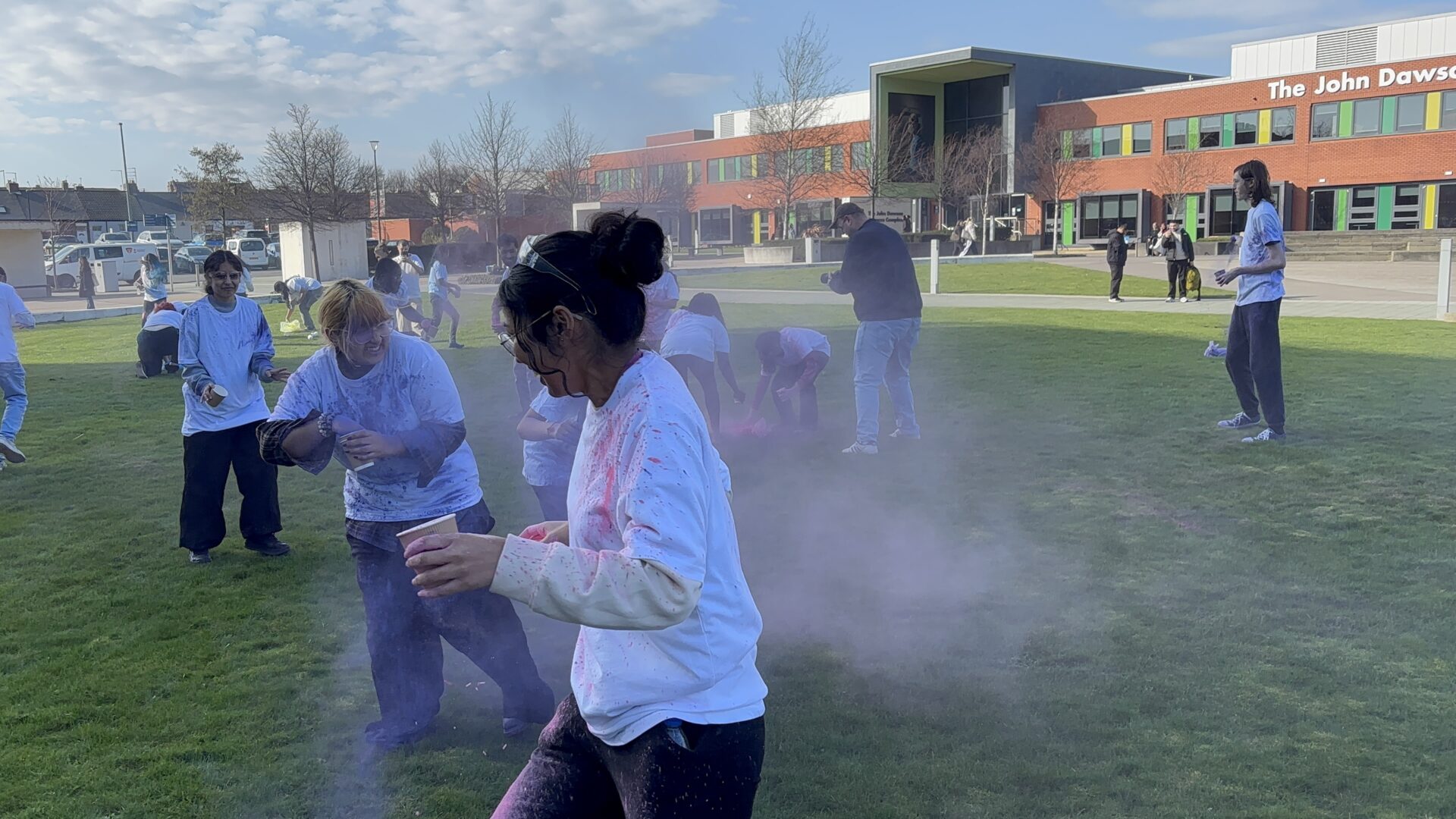
Attendees do not stick to particular groups, and instead interact with everyone during the colour throw. It is incredibly heartwarming to see people who most likely would never speak to each other, come together.
As a result, Holi can also serve as an opportunity for those away from home to connect with their community whilst combatting being homesick. The festival creates a sense of belonging for all parties involved, but it is especially important for international students. Doshi goes on to say: “I didn’t know many people at university before coming to Holi. I even met some people from my home country.”
Upon visiting the Hindu Temple in Newcastle, I am able to learn more about the origins and meanings of holi. Pandit Bal Krishan Gautam, a Hindu priest at Hindu Temple Newcastle, says: “With all of the festivals, two things are there. One is the social effect, one is the religious part. So the religious part, there is the blessing. And the social part is that the festival brings all people close together.”
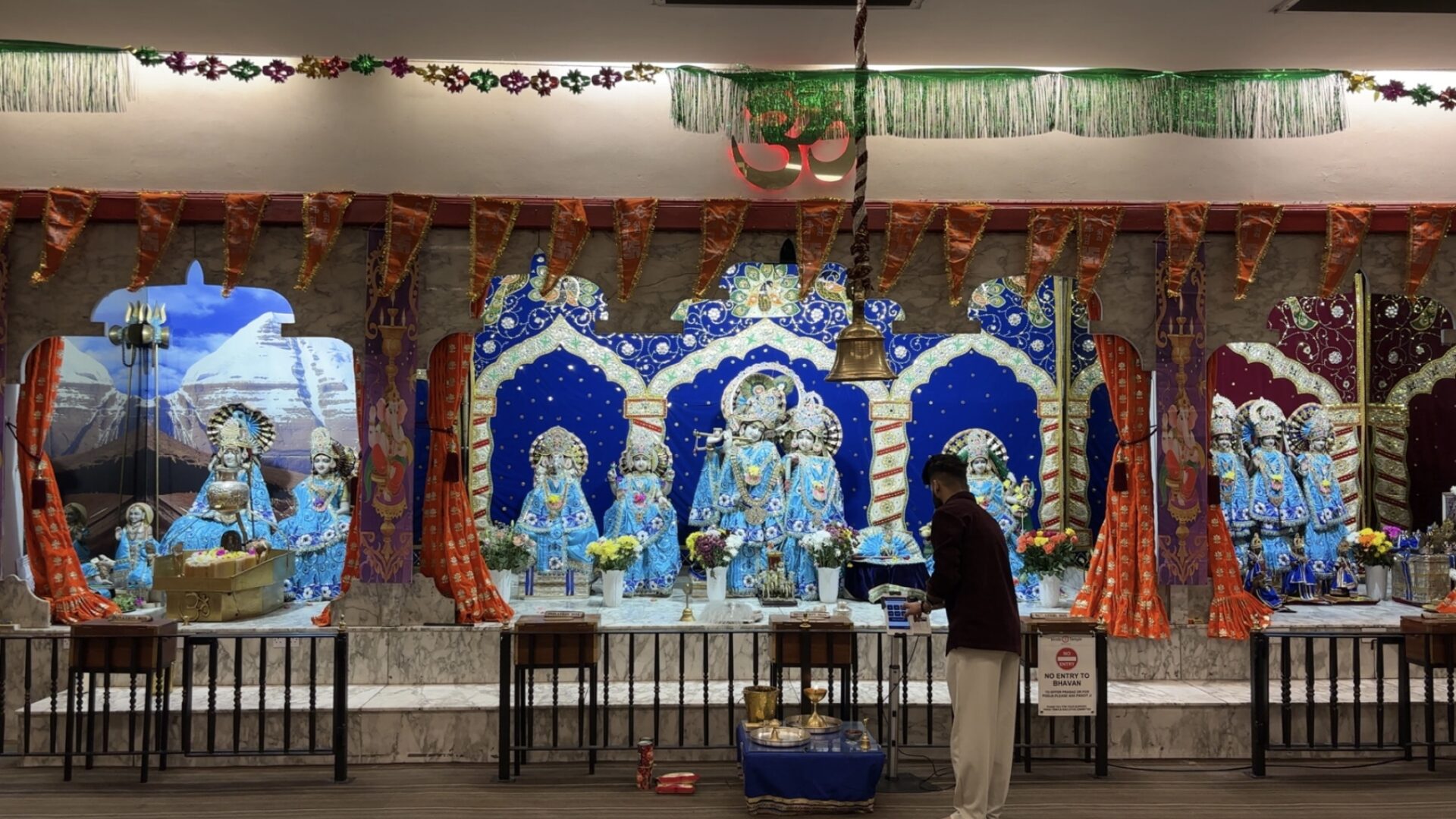
He goes on to describe how originally, Holi was predominantly celebrated by North Indians due to the origins of the festival. He says: “These days, Holi is very popular. It used to be popular only in North India, Gujarat and some other places. But these days, even in South India, people are playing Holi there. So, it brings the community closer, especially in the U.K.”
Since India’s independence, major waves of Indian immigrants have travelled to the U.K., helping the U.K. become the multi-cultural society that it is today. Consequently, Indian values and traditions have since integrated into English culture, such as Holi. Pandit Gautam goes on to say: “When I first came here twenty years ago, it was very different. So now, all the groups are very, very active. Take the example of the Maharashtrian festivals, they are very popular these days. The good thing about Newcastle is that… all the people, from different parts it doesn’t matter, they celebrate the festivals.”
Holi can also represent new beginnings. Drawing on religious scripture, the festival in the modern day has been adapted to apply to a variety of different beginnings, such as relationships and friendships. Holi is not meant to be limited to religious followers, it is a time for connection and unity.
Video link: https://www.youtube.com/watch?v=QJ9Za1_zi3M
Wordcount : 825