BUCS Super Rugby: Home of the Future Stars
Written by Harvey Allen on 24th March 2026
The competition for university dominance and professional futures.
University rugby union has forever been highly competitive, culturally huge and embedded in the game. You only need to look at The Varsity Match played every year between both the University of Oxford and the University of Cambridge, ever since 1872. Unlike most university sport, The Varsity Match, as well as The Boat Race, have been broadcast live on television for years.
That would all change in 2016, as BUCS created “Super Rugby”, an eight-team competition combining the best sides of their North and South competitions. It was the start of something that would change the face of not only university rugby, but university sport in Britain forever.
The league provided top-level competition for university teams, raising the level of quality, whilst Super Rugby started regularly streaming their games live for free, displaying elite level rugby for widespread audience every Wednesday night.
With the 2025-26 season ending, BUCS Super Rugby celebrates its tenth anniversary. The league has nurtured over 100 professional careers, as well as 16 alumni that have international caps. Their social media platforms boast over 20 million impressions, 9.1 million views on videos, as well as 15,000 new followers last season. It’s clear that the league has a big audience, a big player prospect pool, and it’s only getting bigger.
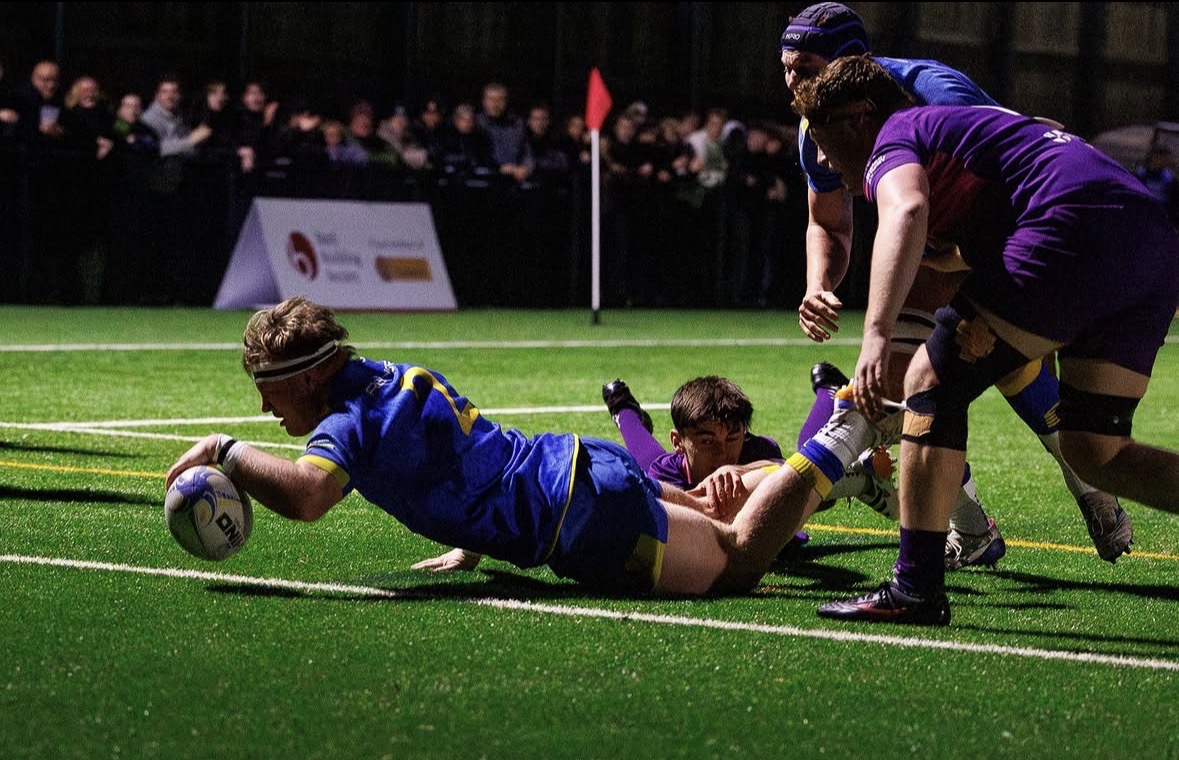
Bath score against Loughborough to send BUCS Super Rugby title to the final day – Bob Bradford
“BUCS Super Rugby provides a distinct pathway that has transformed the rugby ecosystem. While some players are already contracted to Premiership clubs and use the league for “nursery” development, others are “late bloomers” who might never have been discovered without this platform. The university pathway has always developed players across both the performance and community space.” said Dr Daniel Milton, Head of Men’s BUCS Super Rugby.
“BSR creates a clear domino effect across the BUCS pyramid institutions like Newcastle, Northumbria, and Brunel are striving to reach Super Rugby level, raising standards below. This competition is healthy, though reaching the top is tough, as the intense promotion play-offs demonstrate.”
He continued: “The focus is on uniting the whole ecosystem behind a purposeful vision. Competitiveness is a positive byproduct, but our primary objective is sustainable growth aligned with the BUCS strategy — ensuring the “Super” product enhances, rather than fragments, the wider university sporting experience.”
Super Rugby universities, as well as challengers to be promoted into the league, have access to state-of-the-art facilities, as well as a plethora of training staff and coaches. A number of these teams also have partnerships with a neighbouring professional club, allowing the players to transition into senior academy seamlessly.
“Having a good understanding of both [academy and university rugby]: it’s more or less identical in terms of what you’re able to learn and how you’re able to develop on and off the pitch is more or less identical.” observed Gareth Elliott, the University of Exeter’s head of rugby.
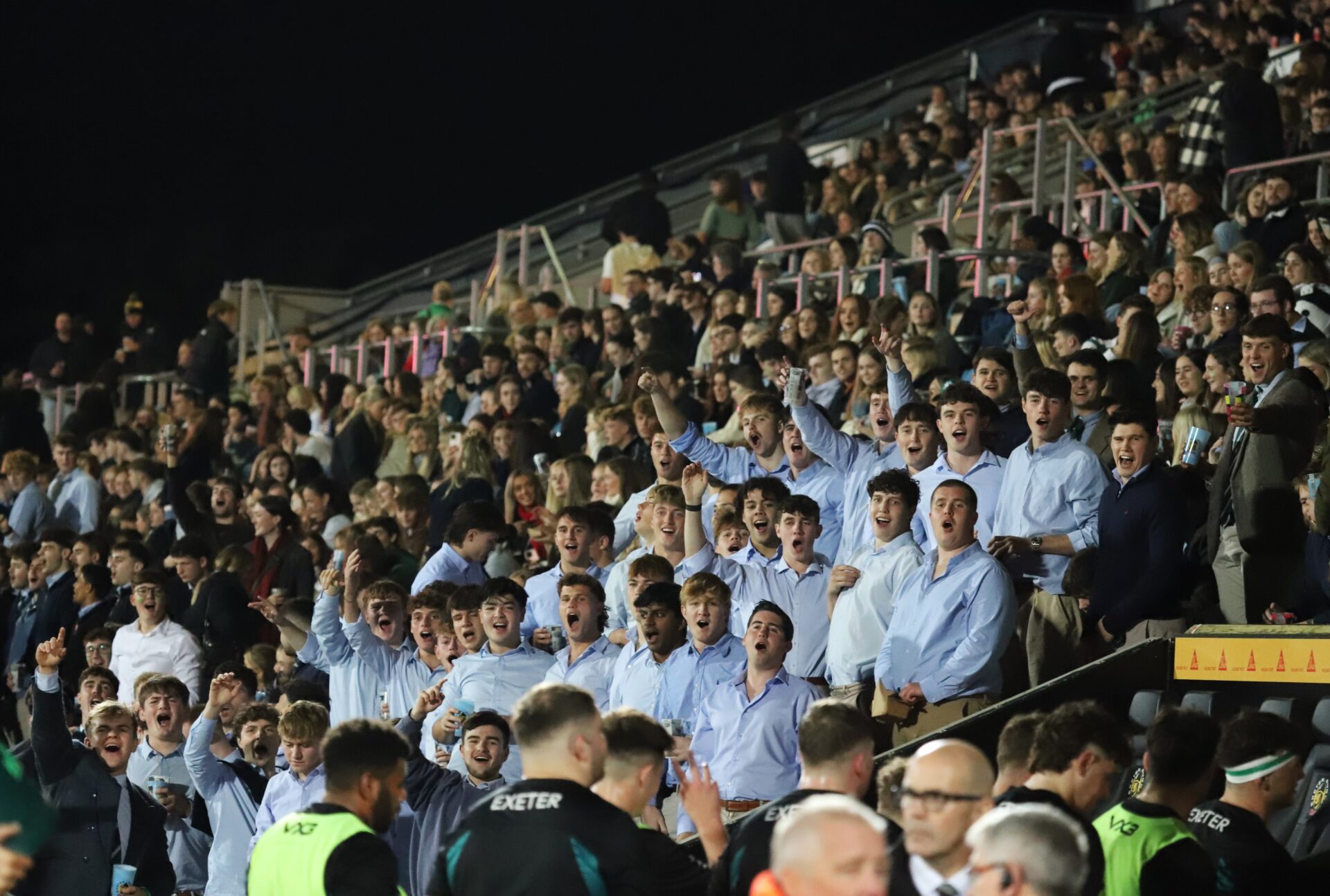
Exeter University supporters cheering against Durham at Sandy Park – Leia West
“The only difference being you’re also studying full time to get a degree, so you’ve really got to manage and balance your time to be able to do all your academic commitments, as well as have your rugby brain engaged at the same time, which is a challenge, but it’s a challenge that sets everybody up really well afterwards, because they’ve tested themselves both academically and from a rugby point of view.”
The proof is in the pudding: 88% of student athletes agree there is a direct pathway into professional rugby, whilst 81% of students stay with the set ups, citing good player wellbeing. The environments provide players with a great resource to develop, both physically and mentally if the work rate is there.
“The commitment to be able to do that is a higher level. You’ve got to be ready to get up early and really commit to your physical development, eat the right things, always be at training, do your analysis. It’s not something that just happens, and so as you do in all sport environments, you get some guys that have bags of talent but unfortunately don’t put in the hard work and have the commitment to go along with.”
The growth and prosperity of the league can’t be ignored, as an opportunity for young rugby players to develop into young professionals, and as an elite level league to watch at home. It’s already being talked about on social media, with university players such as Josh George-Oppong (Newcastle 1sts) and Efe Aihe (Loughborough 3rds) putting their sides out there and raising the profile of the university game at all levels.
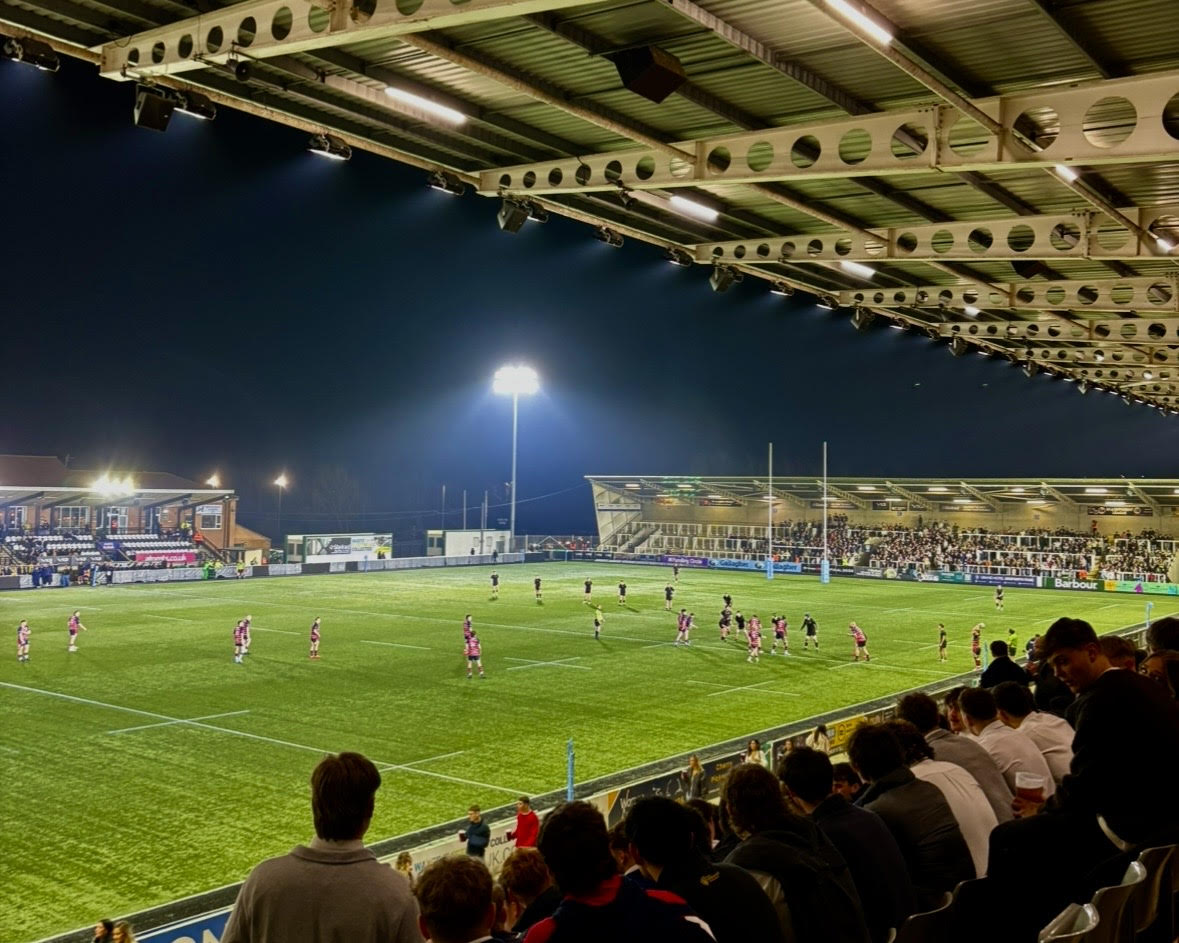
Newcastle vs Northumbria Rugby teams playing at Varsity, Kingston Park, Newcastle
Daniel Milton believes that: “Commercially, we are scratching the surface. Will Roberts (BUCS CEO) and Dan Roberts (National Performance Manager) in collaboration with the universities are focused on defining our core purpose to attract further investment. Next steps will require collaboration across English, Welsh, and potentially Scottish unions.”
After ten strong years of university rugby prospering, I think it’s safe to say it’s only going up. It’s got a long way to go if it wants to rival the USA’s NCAA system, but for now we’ve got it quite good. University sport has never been more celebrated, and it will only get better.