How has Sunderland being awarded a Music City status helped its local bands?
Written by Holly Standen on 31st March 2026
For decades, Sunderland has been known for its industrial heritage – shipbuilding, coal mining and a fierce loyalty to its football club. But in recent years, a new identity has steadily taken shape. Since being officially recognised as a “Music City”, Sunderland has begun to reposition itself as a hub of creativity, collaboration and emerging talent.
For local musicians, this shift has been more than symbolic. It has reshaped the opportunities, visibility and community surrounding live music in the city. One of the most immediate impacts of the Music City status has been a noticeable increase in engagement with live music. Local guitarist, Zach Barlow, for Red Remedy, has seen this change firsthand: “I’d say so, yeah,” he explains.
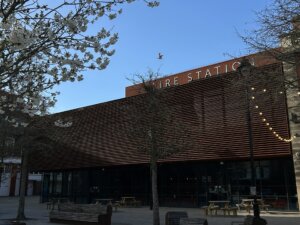
The Fire Station. Photo credit: Holly Standen
“There’s definitely been an increase with people wanting to go to gigs…people who’ve never thought to come to gigs or never been aware that there’s been gigs running in Sunderland.”
This renewed interest reflects a wider cultural shift. Sunderland’s music scene is now being actively promoted and celebrated whereas it was once perceived as ‘niche’ or ‘underground’. Events tied to the Music City initiative, like the Roots showcase, which featured local talent such as Jodie Nicholson, Lottie Willis and Red Remedy, have helped introduce new audiences to Grassroots acts.
For bands, this means not only bigger audiences but also a sense that their work is being recognised as part of something larger. Before Sunderland’s Music City designation, many bands faced an uphill battle just to perform. Zach recalls how the early days for his band Red Remedy were a constant struggle for visibility.
“When we first started we had to put our own gigs on, we had to find our own spaces,” he says. “There was like a five band bill just to get people to come along.” This lack of infrastructure made it difficult for artists to build momentum. Without consistent venues or promotional support, breaking into the local scene required persistence and luck.
Today, the landscape looks very different. The Music City status has helped strengthen the connections between venues, promoters and artists, creating a more accessible and inclusive system. “I think it’s definitely become more of an inclusive and wider scene as a whole,” Zach adds.

Syren from Red Remedy, photo credit: Holly Standen
A key factor in Sunderland’s transformation has been the growth and visibility of its venues. Spaces such as The Fire Station, The Bunker, Pop Recs and The independent now form the backbone of the city’s live music circuit supporting everything from emerging artists to established acts. Zach points to the diversity of these spaces as a major advantage. Smaller venues nurture new talent, while larger ones provide stepping stones for bands looking to scale up their performances.
Even pubs and community spaces are getting involved, hosting charity gigs and grassroots events that bring people together. Beyond live performance, the Music City status has also helped establish clearer progression routes for musicians. Frankie Francis, Music Officer for Communications and External Engagement, explains that the initiative is designed to support artists at every stage of their journey. “It kind of gives Sunderland a new identity to play with,” he says. “We are aware that we need to create new identities for the city, and I think one of them is, and should be, music.”
From connecting artists to venues and promoters to offering advice on contacts and legal matters, it acts as a central hub for the music community. Frankie highlights the importance of simple but effective support systems, “One of the most powerful things is I can just put people in touch with people.” For emerging bands, these connections can be transformative, opening doors that might otherwise stay closed. Unlike larger cities where the music scene can become fragmented or cliquey, Sunderland has developed a reputation for collaboration which is now one of its greatest strengths.
“We’ve got a really collaborative scene, there doesn’t seem to be rivalry,” Frankie explains. “Everyone supports it.” This environment allows for greater experimentation and diversity. Bands from different genres can share lineups, reach new audiences and learn from each other. For fans, it creates a richer and more varied live music experience. Zach echoes this sentiment, noting that the scene feels more inclusive and supportive than when he first started. The Music City status also focuses on nurturing young talent. Programmes linked to the organisation such as We Make Culture and youth music projects are helping to create a pathway for future artists.
Zach, who works with young musicians, sees this as essential. “Having new young musicians come up is essential for the next generation of artists because they are the ones who are going to take it up to the next level.” Frankie also emphasises that support is not limited by age or experience. Whether it’s a teenager forming their first band or someone picking up an instrument later in life, the aim is to make music accessible to all. This inclusive approach strengthens the overall network, ensuring that Sunderland’s music scene continues to evolve.
The Music City status has also played a role in reshaping how Sunderland is perceived, both nationally and internationally.“There’s obviously stuff happening,” Frankie says, referring to major events, such as BBC Radio 1’s Big Weekend, choosing Sunderland as a host city. Sunderland’s growing focus on music is helping to challenge old stereotypes and bring new attention to its creative scene, giving local bands greater visibility. However, challenges remain – the wider industry is still difficult to navigate, especially in the age of streaming. Frankie stated, “It’s nearly impossible to get even a minimum wage for music.”
For many bands, success comes in small steps -bigger crowds, radio play or new gig opportunities. But Sunderland now has the infrastructure to support that growth. Ultimately, the Music City status has strengthened Sunderland’s identity and created real opportunities. For bands like Red Remedy, the change is clear – a more connected and visible scene. As Zach stated, “It’s a great time for young artists.”