Young people who read for pleasure is at an all-time low
Written by Louise Carty on 24th March 2026
In a world where reading is more available than ever with access to thousands of books at our fingertips through reading apps, physical books in every charity shop and ‘BookTok’ taking over For You Pages, why are fewer young people reading for pleasure and what changes are being made to reignite the spark for the love of books in our children? Louise Carty investigates.
Studies show fewer young people enjoy reading books for pleasure
Enthusiastic charities who are driven to help re-inspire young people’s love of books have conducted studies that show a decline in young people who enjoy reading for pleasure. Izzy Perks, Marketing Manager for Schoolreaders says: “The National Literacy Trust, who are another charity, do a reading for pleasure study every year and they found recently that children’s enjoyment of reading is the lowest it has been since their study began 20 years ago. I think it is one in three children currently don’t read in their available time at all.”
Why is this a problem?
Professionals believe reading is a key to so many doors that would otherwise remain locked and is fundamental to the development of young people and can positively impact their mental health when able to utilise the material that is out there.
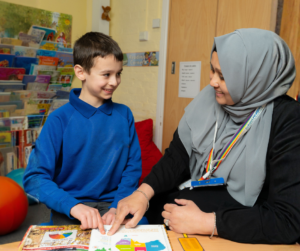
Image credit: Schoolreaders
Reading and how it links with education
Reading and education go hand in hand, it is where a lot of children begin to truly develop their skills through being able to read, write and understand what is going on around them. They are offered support through schools, and their literacy skills are monitored. However, when young people struggle to find enjoyment in books, that engagement and desire to learn begins to dwindle and this has a massive impact on their education later in life.
Izzy, from Schoolreaders adds: “A child who perhaps is 12 and doing triple science, isn’t going to put their hand up and say, sorry, miss, I’m struggling in this lesson, not because I don’t understand the science, but because I’m struggling to read the textbook and so it can go under the radar.”
Reading and how it links with mental health
Mental health is an issue that is so commonly talked about but how can reading actually help combat this issue?
Barbara Henderson, writer and academic says: “You can take this on a very basic level; you can take yourself out of your own world and into somebody else’s. suddenly turning yourself into a fantasy world or a romantic world. You can also learn what things are like for other people and learn that other people have similar experiences to you as well. And that can be really helpful for your mental health to know that you’re not on your own with some things that you go through. Then of course, if you’re reading non-fiction, it will help you with guidance, such as, self-care help tips and all those kinds of things.
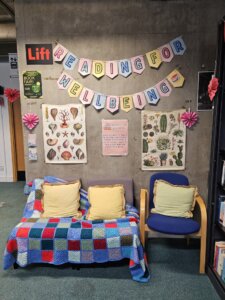
Image credit: Louise Carty
Fiona Hickley, Executive Director at World Book Day adds: “Reading is a brilliant tool for supporting young people’s mental health and wellbeing. When children read for fun, it boosts self-esteem and confidence while also giving them a quiet space to relax and escape, helping them make sense of the world around them. Through stories, they encounter characters facing challenges, friendship, loss and change, which helps them understand their own emotions and develop empathy for others. This is why encouraging reading for fun is so important. Positive experiences with books play a huge role in supporting children’s wellbeing, confidence and learning.”
Does social media have an impact?
Social media is everywhere and impacts trends this has an impact on young people of course but is social media all good or all bad?
Fiona from World Book Day says: “Social media is changing the way many young people consume content. Platforms built around short videos, quick captions and constant scrolling mean that children are increasingly used to fast, bite-sized information, which can make longer, slower reading feel harder to sustain. With social media competing heavily for our attention, many young people are spending more of their free time online rather than reading.”
However, Barbara, writer and academic from the University of Sunderland says, in reference to an article written by The Guardian: “Being intellectual is cool young people are more commonly being seen with a book these days because it’s trendy. The ‘BookTokers’ are turning to the classics to read, and it has become quite a cool and trendy thing to do now.”
So, what is being done?
2026 is The National Year of Reading and many charities are banding together in the hopes of reigniting the love for books in young people, they hope to do this by making reading more accessible to young people and offer support through their work to provide opportunities for young people to develop their skills and become more in love with reading for pleasure again.
Izzy from Schoolreaders says: “Schoolreaders is a key strategic partner in the National Year of Reading. There are lots of different charities that are getting involved, but what we are doing is we’re pledging to deliver 1.5 million individual reading sessions to the children in our schools. So last year we delivered 1 million reading sessions in a single academic year, but for 2026 we want to do even more. We want to recruit more volunteers, reach more children and hopefully deliver 1.5 million reading sessions.”
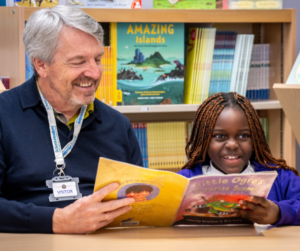
Image credit: Schoolreaders
You can get involved and volunteer with this charity here.
Fiona from World Book Day says: “At World Book Day, we’re working to help reverse this trend by championing reading for fun and bringing together schools, publishers, authors, bookshops, libraries and retailers to reach children from every background and help ensure every child has the opportunity to have a book of their own.