Slow Reading: The rebellion against consumer culture that is transforming publishing
Written by Gabrielle Wilkinson on 21st October 2026
Window displays of trending BookTok paperbacks and tables lined with the latest must reads; a scene that greets booksellers every morning, but is the industry’s obsession with online overconsumption culture outdated?
With #BookTok and #Bookstagram bragging a combined 216 million posts, the industry has had to adapt to a social media reading culture that priorities volume.
However, new data from Everand and Fable finds the biggest shift in the reading community is not coming from what people are reading, but how they are reading. A slow reading movement is gaining momentum, with the most active discussions on Fable including setting smaller, deliberate goals, savouring books, and unplugged reading away from distractions.
The initiative is part of a slow living trend on TikTok that boasts over one million videos and 500 million views. Influencers are rejecting the hustle culture of reading hundreds of books and instead promoting mindful reading, with one content creator gaining 260,000 likes on a single video.
Desiree Worral-Belanger, Senior Partnerships and Editorial Coordinator at Fable, explains: “Slow reading is something that has gained attention everywhere, not just on Fable. It has become its own trend on social media, along with slow living, analog bags, and doing [x] instead of doomscrolling. And it makes perfect sense because let us be real, people are burning out from hustle culture, and they are looking for ways to slow down.”
Dr Mariana Casale, Bibliotherapist and Founder of the School of Narrative Bibliotherapy adds: “There is just too much demand everywhere. Long TBRs and competitions perpetuate a media-driven capitalistic demand onto people.”

Image credit: Dr Mariana Casale
This change in reading habits has seen consumer behaviour alter dramatically. Readers are increasingly seeking out books that promote escapism and emotional regulation. Romance and science-fiction are among the prominent beneficiaries, according to Fable’s 2026 State of Reading Report . Worral-Belanger therefore recommends that the industry promotes complex narratives in books: “Fable sees readers truly take their time with in-depth books, by making character maps, keeping a journal to jot down notes or annotating books.
“People are really sitting with the story and absorbing its contents.”

Alamy Images
Furthermore, 80% of Fable users read a new genre last year, with niche subgenres like Cowboy Romance and Cozy Fantasy emerging. This suggests that the market is moving away from an emphasis on BookTok categories. Helen Lawrence, Librarian and Creator of Reading for Wellbeing Corners, at the University of Sunderland, explains why people are moving outside of their comfort zones: “It is about what is right for the reader at that time; it is not about them picking up a list and setting a target of reading 25 books by the end of summer.”
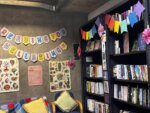
Reading for Wellbeing Corner, University of Sunderland
Image Credit: Gabrielle Wilkinson
These changes in consumer behaviour are driven by community conversation on apps like Fable. By becoming the ultimate social media app for readers, as described by Today’s Author Magazine, Fable’s primary function to connect users with others has led to it hosting over 14,000 book clubs. Figures from Book Club Hub indicate that those who are part of a book club are 50% more inclined to be regular readers and a staggering 323% more likely to buy books at least once a month. This presents an opportunity for booksellers to foster community by hosting their own book club. As Worral-Belanger explains: “Reading can be a really solitary hobby, so knowing that you can open the app and reach a huge community of like-minded people that also love books just as much as you, regardless of how many books you read per month is truly at the core of what Fable does.”
Furthermore, community reading offers the industry a defence against the crisis in reader identity. According to The Reading Agency, over three quarters of those who define themselves as never having been a reader, read daily (77%). Despite non-readers reporting lower levels of reading books, audiobooks and eBooks, they are reading, just in other formats like newspapers and online articles. Lawrence explains why non-confident readers are simply not seeing themselves as readers: “They can find it difficult if they are confronted with lists of most-worthy books to read; it can force them into a position of reading is not for me.”
This dilemma in reader identity makes it essential for the industry to adapt, and an opportunity for booksellers to create their own reading spaces to attract customers instore according to Dr Casale: “Rather than just looking like supermarkets, create community spaces where people can come and read.” Spaces like this are already gaining momentum with over 1,700 Silent Book Clubs worldwide. Unlike traditional meet ups, silent book clubs encourage people to bring along any book they want, sit silently for an hour, and then decide whether to go home or discuss their different books. According to Eventbrite, the number of silent book clubs has risen by 460% since 2020, highlighting the benefits of providing non-pressure spaces like this in bookshops.
Tables lined with must-reads will continue to dominate the book industry for as long as social media promotes overconsumption. However, as the trend of slow reading continues to grow, booksellers need to move beyond BookTok sections in windows and instead prioritise the advertisement of community events that promote meaningful and long-lasting reader engagement.