Nurdles wash up on both sides of the North Sea, as plastic pollution crosses European borders
Written by Daisy Pope on 25th November 2026
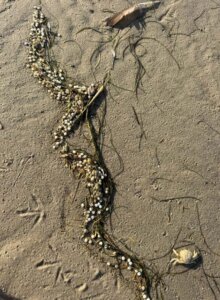
Photo: Aarhus University. Image shows nurdles found along Danish coastlines.
Thousands of tiny plastic pellets spilled into the sea from the Port of Tyne in July have washed up on the coast of Denmark, whilst more have reappeared along the North East coastline after the recent wet weather.
The sightings on both sides of the North Sea have raised fresh concerns about the ongoing environmental impact of the major spill of plastic packaging pellets.
An estimated 18 tonnes of the pellets – known as ‘nurdles’ – entered the marine environment in what was one of Europe’s largest recorded spills.
Green Party councillor for Tynemouth, Tom Bailey, said: “We saw heavy deposits of pellets at Whitley Bay and extremely heavy deposits up in Northumberland, which has come as a huge shock to the people there.”
The tiny plastic beads, which are used in both packaging and plastic products, were released into the river on July 19, after a collision between two vessels at the Port of Tyne damaged containers aboard the cargo ship BG Orange.
The incident triggered a large volunteer-led response to clean up the beaches along the mouth of the Tyne, which could be set to lose their Blue Flag status as a result.
Coun Bailey added: “We are extremely proud of our Blue Flag status. These beaches bring tourism that our businesses rely on, so there is a real sense of loss in the community. If we had more sophisticated clean-up methods, however, we could make a better case during our assessment, but unfortunately the response has not been enough.”
Since then, a considerable number of pellets have washed up along Danish and German coastlines, around 390 miles from the original spill.
The Danish Environment Protection Agency has since tested samples alongside Aarhus University.
Its findings suggest the pellets originated from the River Tyne spill, with their physical characteristics matching those released in July, and their appearance in Denmark and Germany being consistent with the direction of water currents across the North Sea at this time of year.
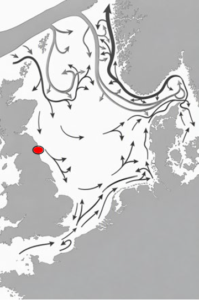
Photo: Aarhus University, 3D Hydrodynamic Model
KIMO, an international network of coastal municipalities across northern Europe, have called for stronger financial support for the coastal communities affected by this marine pollution.
President of KIMO, Preben Friis-Hauge, said: “There was unfortunately not much that could be done about this pollution, as the extent of the nurdles and lack of effective methods to clean up left local municipalities with little options but to support any volunteer clean-ups that were interested in helping.”
KIMO is now following the guidance of POLARIS, an international project established and funded by the EU to tackle nurdle pollution.
Although large-scale recovery efforts have taken place over recent months, the latest sightings suggest that nurdle pollution remains within the marine environment and will continue to reach shorelines across international borders for months and years to come.