
Is student nightlife dying?
Written by Ethan Taylor on 26th November 2026
For decades, nightlife has been a staple of British student culture, with the 90s and early 2000s, regarded as the golden age of clubbing. However, rising costs, safety concerns and changing attitudes toward drinking are putting pressure on the industry. As venues disappear from cities across the UK, questions are being raised about the future of the industry.
Financial Pressures
One of the most pressing issues affecting the nightlife industry today is the rising costs for students when they go out. Nowadays, students spend an average of £60-100 on a night out (depending on their location in the country), whereas during the ‘golden age’, people spent on average £10-30 during a night out.

“Beer” by Jonathan Ichikawa, CC BY-NC-SA 2.0: https://www.flickr.com/photos/jichikawa/12246176604
The cost of a night out, combined with the rising cost of living for students, means that many are left with little option but to spend less on nights out, or just stop going out entirely, as they cannot feasibly afford to with such small student loans.
Safety Concerns
Over the last few years, many concerns have arisen around nightlife. One of the biggest issues concerning the industry is spiking, which involves someone adding alcohol or drugs to a drink or vape without the other person’s knowledge. Research has found that nearly one in six students have experience spiking whilst on a night out.
The fear of being spiked has a widespread negative impact on the nightlife industry, as many students can feel increasingly uncomfortable or unsafe visiting bars and nightclubs. This also raises questions around whether venues are doing enough to protect their customers. Whilst drink covers and anti-spiking campaigns are becoming more commonplace, spiking continues to be a worrying issue.
Harassment
Harassment has been an issue in the nightlife scene for a long time, and it continues to be a major problem. It can take many forms, including sexual remarks, staring, groping and in many cases, sexual assault. Harassment is also often linked to drink/drug spiking, as offenders use the drink/drug to take advantage of their victim.
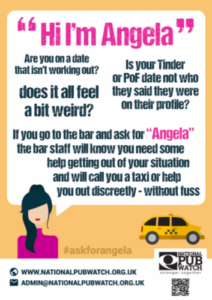
In recent times, campaigns and charities have been set up to raise awareness for the issue. This includes the “Ask for Angela” campaign, which encourages people to go to the bar and “Ask for Angela” if they feel unsafe whilst in a venue. Staff are trained to deal with these situations, and can discreetly escort someone out of a venue, or call security for immediate assistance.
There are many other issues around nightlife culture in the UK, but spiking and harassment are often the issues that cause the most fear and harm, and can deter people from visiting nightclub venues, or spending as much money.
Changing habits
The traditional university night out has for a long time been associated with crowded nightclubs, cheap drinks and late nights. However, the way students socialise is evolving, with alternative activities and changing attitudes towards alcohol potentially reshaping the university nightlife experience.
For many students, a night out no longer means spending hours in pubs and night clubs surrounded by hundreds of other people, but instead going out for food, or participating in society events or smaller social gatherings.
On average, younger generations are consuming much less alcohol compared to previous generations, and this can be attributed to the move away from the traditional night out for many students.
So, is Student Nightlife dying?
Student nightlife is very much still a staple of university culture, but it is experiencing major evolution. The days of students spending hours in a nightclub seem to be somewhat dwindling, as they look for more alternative ways to socialise and enjoy nights, without needing to get drunk or spend lots of money.