Life After Loss: How reading helped me navigate grief
Written by Gabrielle Wilkinson on 5th October 2026
November 4th, 2025, is not just the day my dad died; it is an endless car ride back home and the first time I enter the house without my dad there to greet me.
I always thought it was a given that my dad would walk me down the aisle and meet his grandchildren.
“News stories flood my screen everyday with another tragic death, but I never imagined that it would be my Dad.”
What happens now?
When my dad died suddenly in November, I remember thinking, I do not know how to cope. After finding my comfort in reading, I discover I am not the only one who finds solace in a good book.
Which is how I find myself on a random Wednesday evening on a Zoom call from different sides of the country, talking about the biggest heartbreak we face.
Memories mask behind our grief-stricken eyes and we both think the same thing; I wish we never had to meet.
Speaking to Agnes Simonfalvi who lost her mum in November 2024, we discuss the shock of grief and I ask, is reading the antidote?

Me with my Dad – Image Credit: Gabrielle Wilkinson
Agnes, 35, a grief content creator and lawyer from Glasgow, recalls waking up to the nightmare that her mum was gone after suffering a cardiac arrest: “I never imagined that was the way I was going to lose my mum. In my head, she was always going to die of old age.”
“Nothing could have prepared me for it.”
One book prescription please!
Whilst hopelessly flicking through videos a week after my dad’s death, I stumble upon a ‘must visit’ bookstore in Sedgefield called Back of Beyond Books. Begging my boyfriend to go, we set off an hour later. I glance over the shelves deciding what world I might escape into as a slight smile creeps onto my face…
“Even if it is not a book on grief, books take you to a different world. I think it really helps ease your pain”, Agnes adds.
Sophie Longmire from It’s Time, a charity for young grievers tells me about their book club that delves into different experiences of grief: “We did Intermezzo by Sally Rooney and that was two brothers’ experiencing the loss of their dad and Hamnet is the loss of a child.”
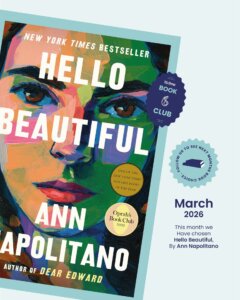
It’s Time Book of the Month for March – Image Credit: Sophie Longmire
In an exclusive interview with Spark Sunderland, Ann Cleeves OBE, a crime author renowned for her Vera Stanhope series, said that reading is “the biggest escape there is.”
Cleeves credited books with being a comforting source of escapism during her cancer battle.
“If you have got horrible thoughts going around in your head, it is good to be in someone else’s head for a bit.”
However, in a tech obsessed world where privacy is a privilege, is reading for comfort now a niche hobby?
“I do not think reading is a very in thing to do. I even find with TikTok’s, if you put a longer caption, the comments prove people did not read the captions” Agnes explains and it is not hard to see why, with Gen Z spending an average of 7 hours 43 minutes per day on smart phones, over 54 hours weekly.
Contrary to this, Dr Barbara Henderson, author of five fiction books and a lecturer in Creative Writing at the University of Sunderland thinks “the death of reading is exaggerated.” BookTokers have lots of followers and younger people are carrying books around with them.”
Death: Still Taboo?
I scan my eyes over every possible shelf in the bookstore, from mental health to theology; I can not find any grief books. Already feeling awkward about the topic, I eventually work up the courage to ask the bookseller; almost smelling the awkwardness, she leads me to a total of two books on grief. Two! I feel so alone.
Agnes recalls a similar experience: “I awkwardly had a little laugh, is this it? And then his tone was like is this not good enough?”
“There were a couple books about losing a partner and a couple about losing a child. There were no books about losing a parent.”
Many believe bookshops have a responsibility to cater to all different needs, so why is there a limited stock on the one genre that we all have in common, grief?
“People sort of expect you to go through that, it is a natural part of life. You will realistically lose a parent at one point” Agnes emphasises, with frustration at the reality of it all.
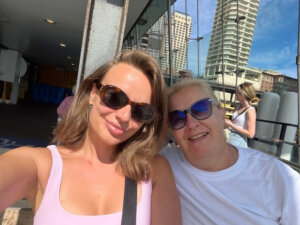
Agnes with her mum – Image Credit: Agnes Simonfalvi
Research by Dr David Lewis finds that reading as little as six minutes a day can reduce stress levels by 60%. “If you read as a young person, you are less likely to develop mental health problems in later life. Barbara adds, emphasising reading’s ability to help you connect with others; “We have never needed empathy more.”
“Read something that is a bit out of your comfort zone”, Agnes urges.
Saying goodbye to Agnes and closing my laptop, I glance at the picture of my dad next to my desk. I wish we never had to meet, but it is nice to not be alone.
This feature is dedicated to Peter Wilkinson and Ildiko Simonfalvi.